
01 Evidence synthesis
Defender UX Signal Agent
Defined how messy UX evidence becomes decision records, ADO-ready UX issues, validation plans and PM/engineering summaries — separating evidence from interpretation.
These case studies include confidential product work. Request the password from Kit Horvath:
Incorrect password — try again, or request access above.
← Back to homeFrom static artifacts to an AI-assisted production workflow. My role shaping the NPF workstream for Microsoft Defender UX — reusable building blocks, SFE- and Fluent-backed prototypes, accessibility gates, signal synthesis, and an emerging operating model for how Defender UX moves faster with evidence and control.
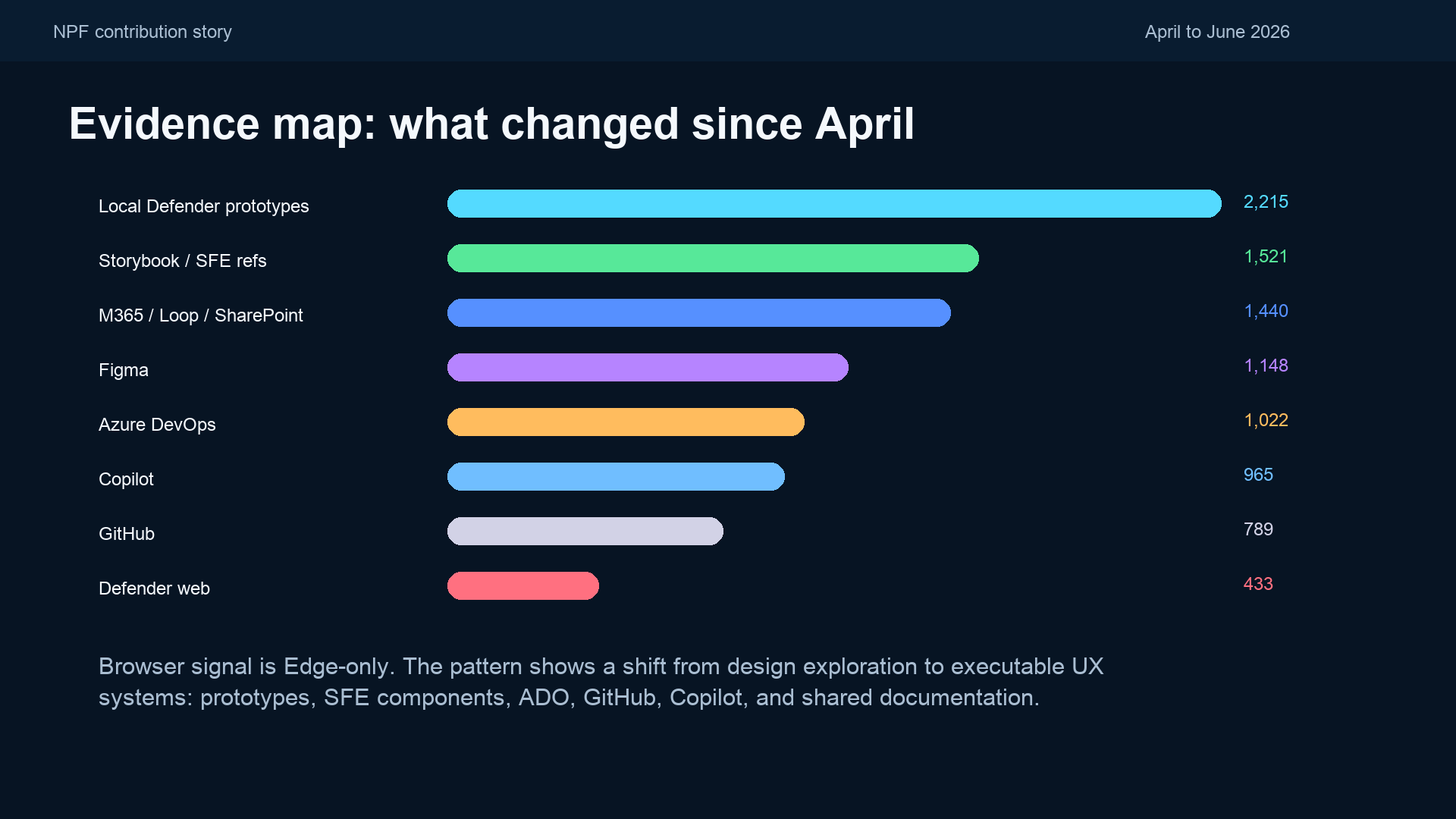
Defender UX wasn't missing ideas. It was missing a repeatable way to turn scattered signals into implementation-ready product work: evidence, decisions, prototype behavior, accessibility requirements, SFE/Fluent constraints, and ADO-ready summaries.
The opportunity was to treat AI not as a chatbot layer, but as a production capability for the design organization — helping designers synthesize messy inputs, prototype faster, preserve human control, and create reusable patterns engineering could trust.
Defined how messy UX evidence becomes decision records, ADO-ready UX issues, validation plans and PM/engineering summaries — separating evidence from interpretation.
Moved beyond mockups into coded prototypes, reusable prompts, local repos, pattern audits and video storytelling teams could inspect and reuse.
Connected Figma, SFE, Fluent 2, page templates, component constraints and quality gates so design intent could survive implementation.
A responsible interaction model for ambiguous intent, confidence, transparency, control and reversibility in AI-assisted navigation.
Accessibility scorecards, WCAG-oriented issues, semantic headings and review readiness built into the workflow before handoff.
Turned ambiguity into structured summaries, acceptance criteria, validation metrics, SFE notes and clear next actions.
Connected Edge, Figma, SFE, Copilot, ADO, GitHub, Teams, Outlook and local Defender prototypes into one working production surface.
Shifted toward SFE components, Figma kits, Fluent-backed implementation, accessibility checks and Prototype Lab workflows.
A Copilot-powered Defender navigation personalization prototype using role, JTBD, usage, confidence and policy signals to shape pinned navigation.
Signals become specs, specs become SFE-grounded prototypes, prototypes become decisions, and decisions become ADO-ready outputs.
The clearest proof point: a running Defender prototype that changes onboarding behavior through role, JTBD, usage and hybrid navigation recommendations — inspectable in the real product shell, not a static mockup.
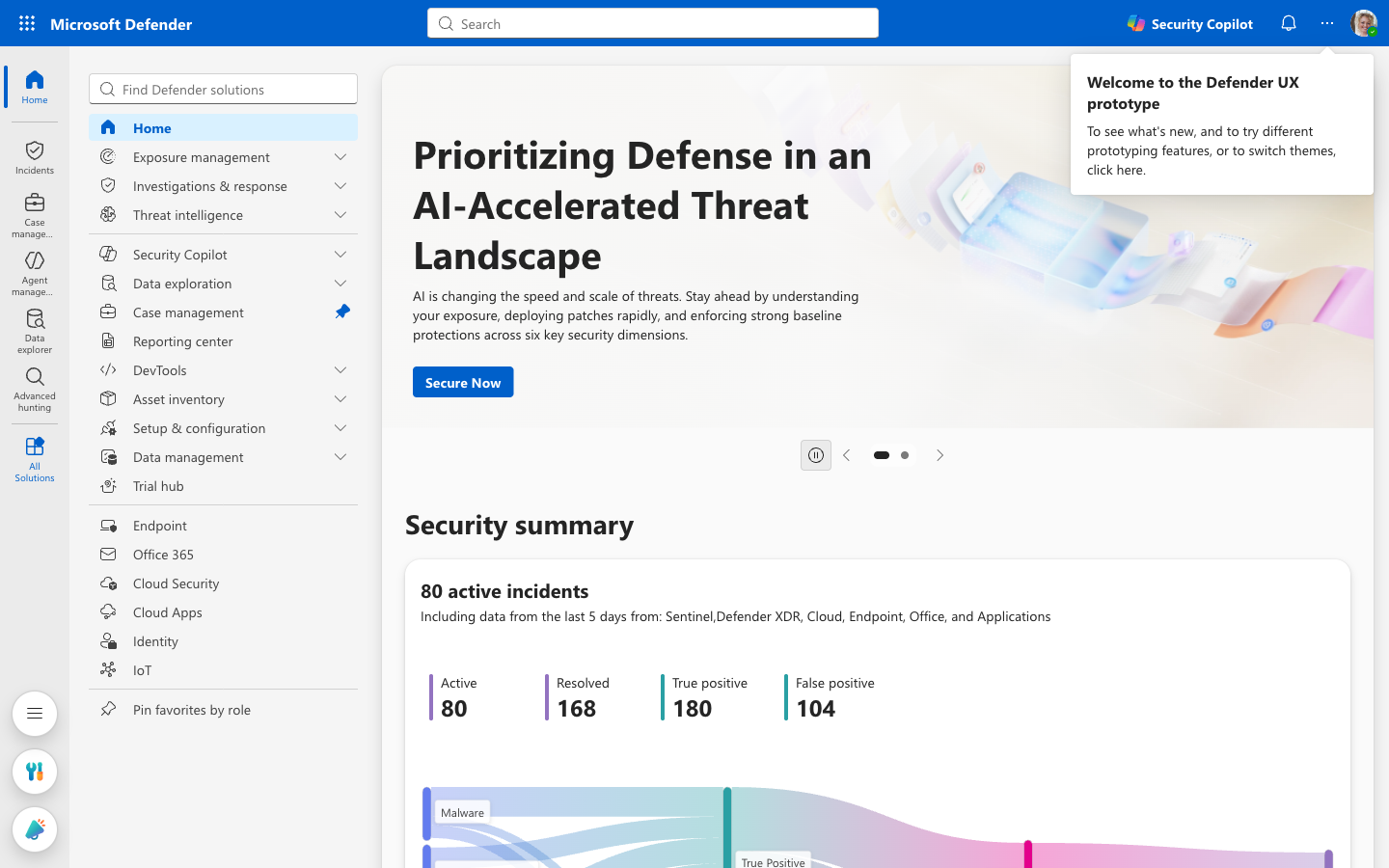
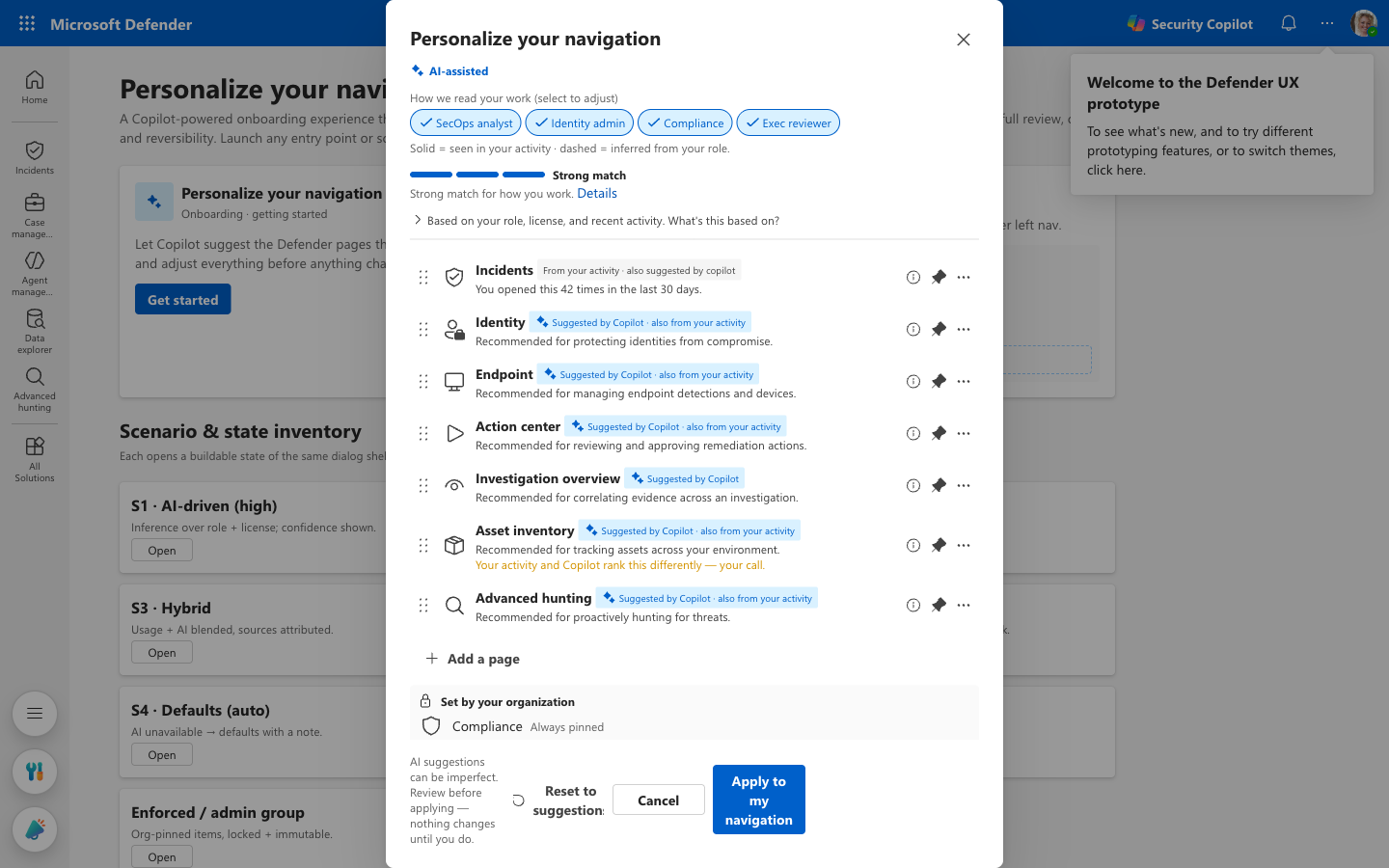
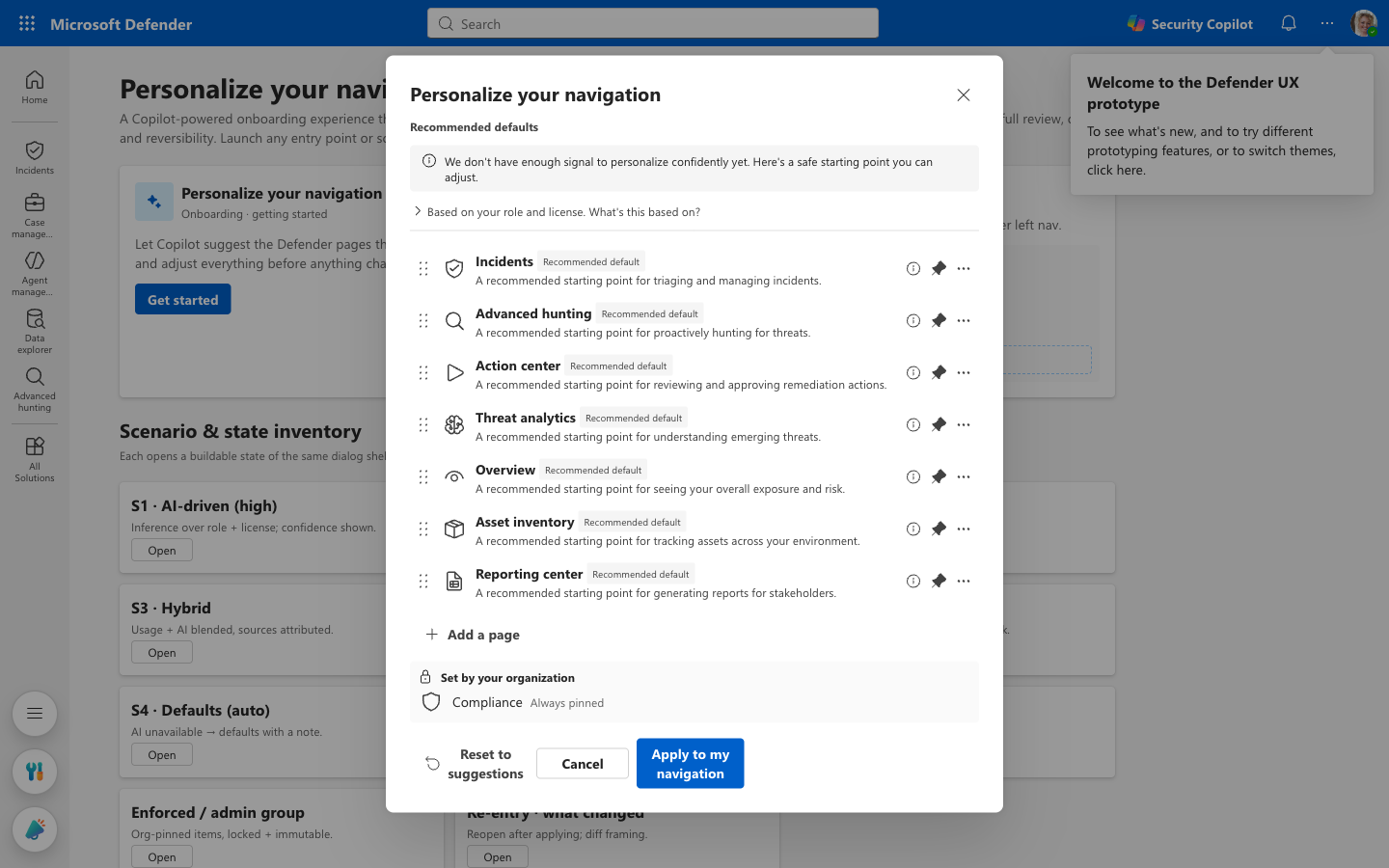
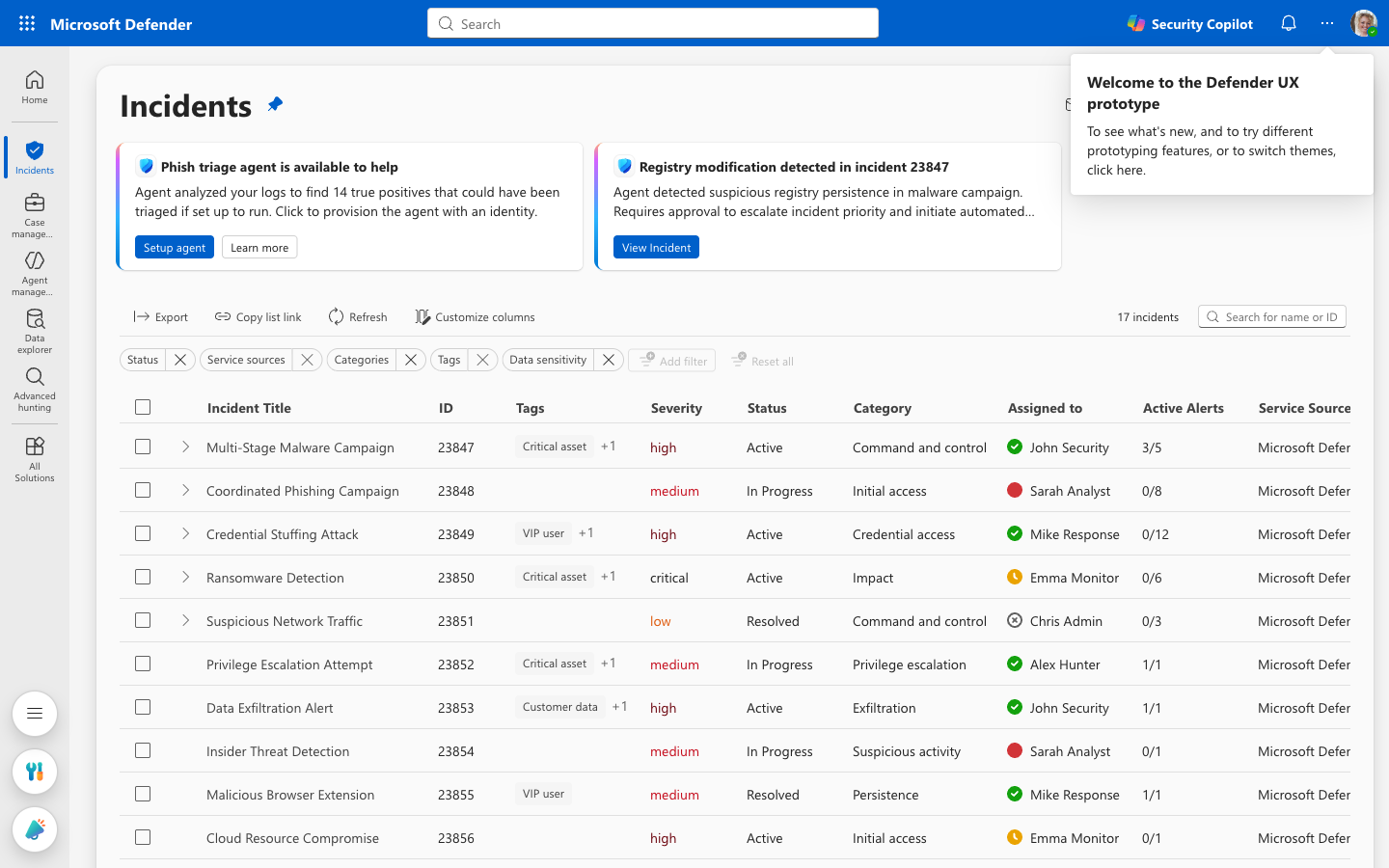
The contribution worth claiming: Defender UX moved from static artifacts toward a repeatable AI-assisted production workflow.
Not just that I designed an AI prototype — but that I helped define how AI, SFE, Fluent, accessibility, prototype labs and evidence synthesis can become the operating model for future product work.
| Evidence | What it supports | Source type |
|---|---|---|
| NPF narration & portfolio narration | April–June progression, NPF framing, production-function thesis, Signal Agent and Prototype Lab story. | Local project files |
| Defender navigation onboarding prototype & share-out | Role / JTBD / usage / confidence / policy-based personalized navigation and prototype proof point. | Local images + M365 metadata |
| Defender UX Signal Agent backlog & prompts | Evidence-to-decision workflow, ADO-ready UX issue templates, PM/engineering summaries, SFE/prototype/A11y handoff fields. | Local repository files |
| SFE / Fluent / page-template artifacts | Design-system adoption, page-list recommendations, implementation-facing patterns and Fluent-backed constraints. | OneDrive metadata + local decks |
| A11y tracking & prototype accessibility strategy | Accessibility as production gate: scorecards, annotations, semantic structure and WCAG-oriented issues. | M365 metadata + local workflow files |
| Prototype Lab & video storytelling | Operating model for reusable coded prototypes, prompts, repos, pattern audits and design-to-engineering translation. | Local video/image artifacts |